|
Factors Affecting Variation
|
|
Participants and Funding | Mulga Project Overview | Phenotypic Variation | Taxa List and Key | Mulga Mainpage
|
|
|
Hybridization
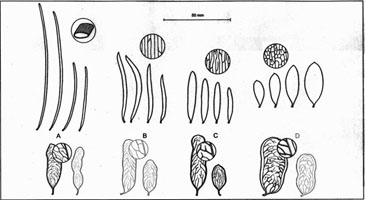
Hybridization among different morphotypes has been proposed as a mechanism that is generating diversity in Mulga. This is
evident in the field where phenotypic intermediates are common between A. craspedocarpa and A. aneura (see photo below).
These are easy to identify due to the vein reticulation in A. craspedocarpa. Hybridization among A. aneura entities may
also occur at the local level or have occurred in the past and are distributed throughout the range of Mulga. We are
investigating these hypotheses with microsatellites, DNA sequences and morphometics.
|
|
|
Apomixes
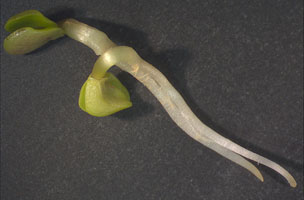
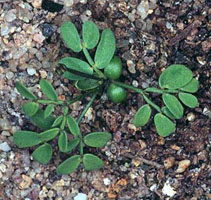
Apomixis is the asexual reproduction through seeds. We have observed several characteristics of this phenomenon in Mulga
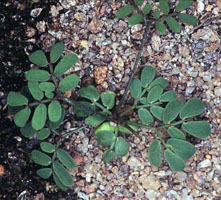
seedlings. First on a few occasions a germinated seeds has produced two plants (below, left) and in other occasions we have
seen plants with three cotyledons and two meristems (see below) , evidence of polyembryony which is sometimes associated
with apomixis. Preliminary microsatellite analysis of seedling arrays have supported the apomixtic hypothesis. Further
genetic and embryological work will further test these ideas.
|
|
|
Neoteny
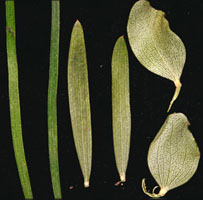
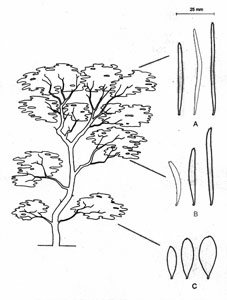
Neoteny is the retention of juvenile characteristics in a mature plant. Field work has suggested this as a factor to be
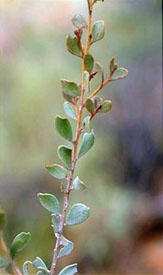
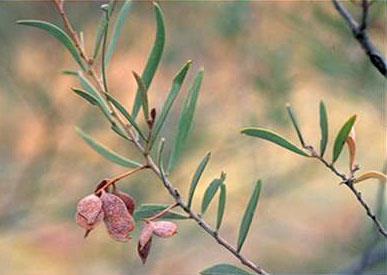
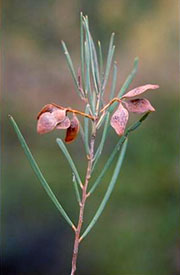
accounted for in Mulga with respect to plant habit and phyllode (leaf) size. Three distinct phyllode types were collected
off a single tree in a central Australian population of Mulga (see below). These three phyllode types were also seen
individually on trees in the same population. This hypothesis is being investigated with genetic and field work.
|
|
|
Polyploidy
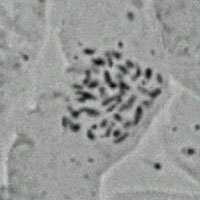
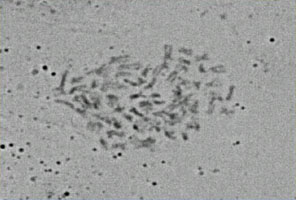
Polyploidy is often associated with apomixis and plant species complexes. Polyploidy can reduce gene flow in a population
but when combined with apomictic seed production can maintain odd ploidy levels. Chromosome counts have identified triploid,
tetraploids and pentaploid Mulga plants. Further chromosome counts along with flow cytometry will be used to further
investigate the role of polyploidy in Mulga.
|
|